
One Porous Ceramic, Engineered for Each Station
The grinding chuck is built for flow and dressing life. The rest of the family is tuned for inspection, dicing, general work holding and air bearings.
What Makes a Chuck Survive Grinding
Scroll through the five decisions that separate a grinding chuck from an inspection or dicing chuck.
Pore Grade: 100 µm Coarse
High air flow that survives grinding water and silicon slurry, and cleans back easily. Finer grades are available for polish and stress-relief steps.
Porous Depth: 15 mm
The suction face is a wear surface. A 15 mm porous body can be self-ground and dressed on the machine many times before it is consumed.
Frame: 99% Alumina, Holds Taper
Chuck taper and flatness go straight into wafer TTV. A stiff, wear-resistant alumina frame keeps that geometry under continuous load.
Vacuum Zoning
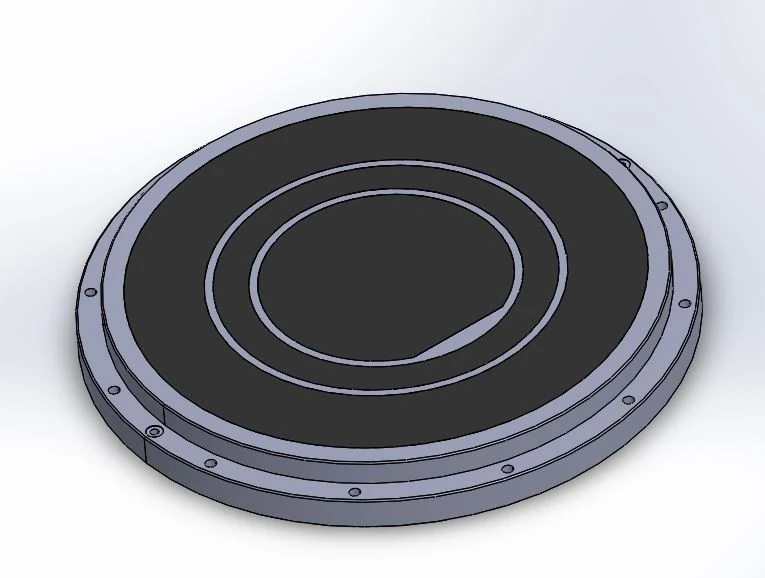
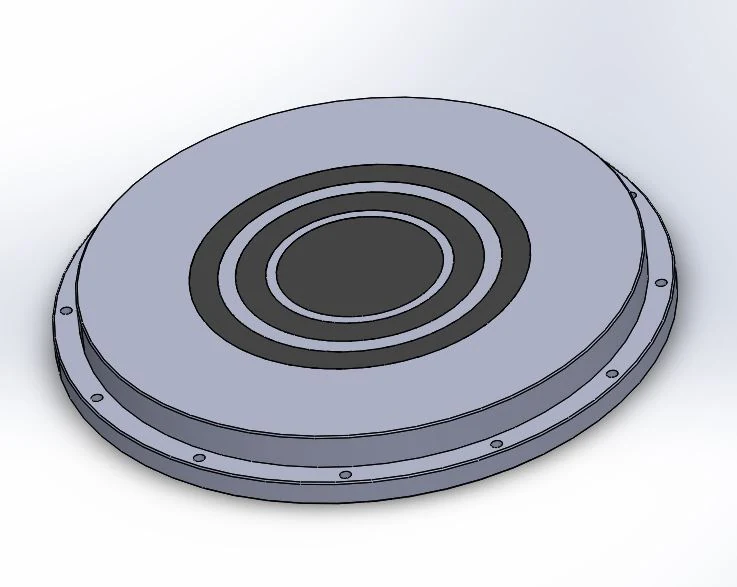
One continuous zone, or concentric zones so one chuck holds 300, 200 and 150 mm wafers without exposed porous area bleeding vacuum.
Fit & Verification
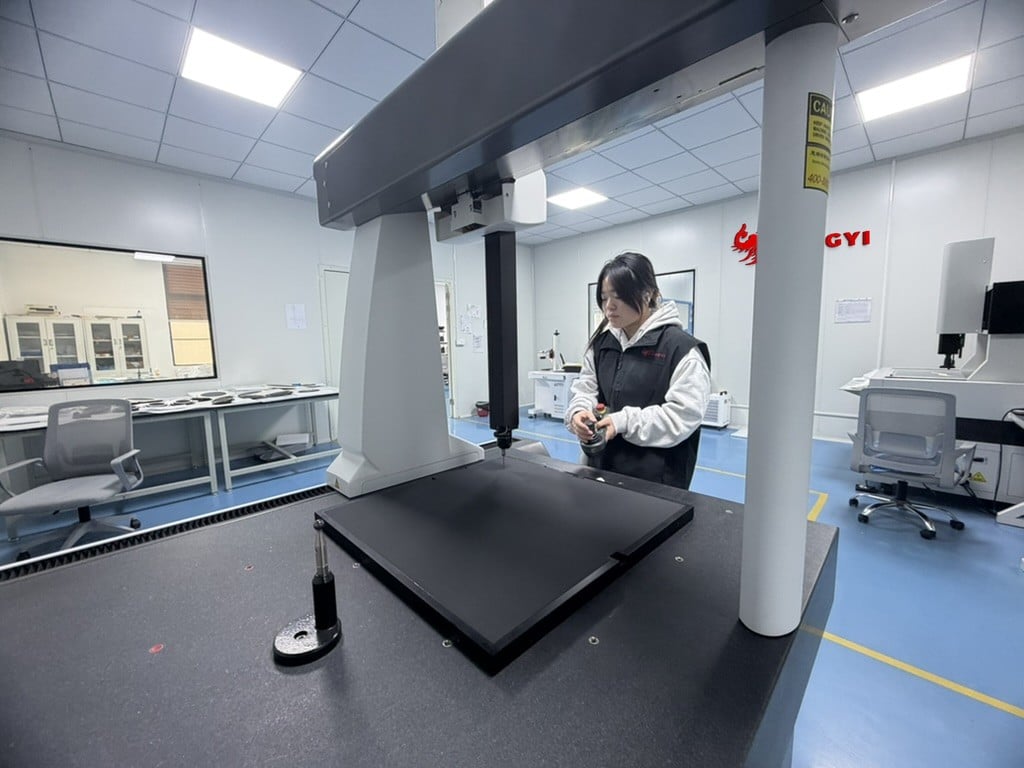
Built to your grinder from drawing or sample — spindle interface, vacuum port and bolt circle — then flatness and critical dimensions are measured before shipping.
 01 / 05
Standard Grinding-Duty Build
LONGYI's standard build for grinding-duty chuck tables. Every item is adjustable — pore grade, porous thickness, frame material and mounting geometry are specified per application.
| Technical Item | Engineering Capability & Selection Reference |
|---|---|
| Product Type | Porous ceramic vacuum chuck table for wafer grinding, thinning and rotary surface grinding equipment. |
| Suction Surface | Microporous ceramic, coarse-pore grade, standard mean pore size 100 µm. Finer grades (40 µm, 20 µm, 2 µm) available where a smoother, lower-flow hold is preferred. |
| Porous Layer Thickness | Standard 15 mm. The thick porous body is what allows repeated on-machine dressing (self-grinding) of the suction face over the chuck's life. |
| Outer Frame / Body | 99% alumina (Al₂O₃) for rigidity, wear resistance and flatness retention under grinding load. Stainless steel, aluminium alloy and SiC bases available on request. |
| Porosity | 40–45% open porosity, tuned with pore grade to balance holding force against air flow. |
| Wafer Sizes | 4″ / 6″ / 8″ / 12″ (Ø100 / Ø150 / Ø200 / Ø300 mm). Non-standard diameters, square and rectangular formats built to drawing. |
| Flatness | Ground and lapped to typical ≤ 3 µm over the working surface; tighter values and specified chuck taper on request. |
| Vacuum Range | Typical working vacuum -60 to -80 kPa. Coarse pores raise flow demand, so pump capacity should be confirmed against chuck area. |
| Surface Finish | Precision-ground suction face; grit and finish matched to the grinding recipe (coarse for wet grinding, finer for polish and stress-relief steps). |
| ESD / Anti-Static | Anti-static (dissipative) ceramic grades available where charge build-up on thin or compound-semiconductor wafers is a concern. |
| Dressing & Re-Grind | Suction face can be dressed in-situ on the grinder to restore flatness and taper. Once the porous depth is consumed, re-surfacing or replacement can be evaluated. |
| Customisation | Built from drawing or from a sample chuck: diameter, thickness, chuck taper, vacuum port, seal groove, base plate and mounting pattern made to match your machine. |
Material Selection
The porous suction layer and the frame are selected separately. Common combinations for grinding duty:
Supported Wafer & Substrate Materials
Coarse 100 µm pores suit wet grinding of standard silicon; harder and more brittle substrates are usually paired with a finer grade or an anti-static body.
Values shown are typical for the standard grinding-duty build and are provided for selection reference. Final specifications are confirmed on the approved drawing before production.
Pick the Pore Grade for the Step, Not the Catalogue
Pore size is the single most important choice in a porous chuck, and grinding pulls it in the opposite direction from inspection or bonding. Coarse pores trade a little surface smoothness for flow, clog resistance and easy cleaning.
| Comparison Item | 100 µm (Coarse) | 20–40 µm (Medium) | 2 µm (Fine) |
|---|---|---|---|
| Mean pore size | 100 µm | 20–40 µm | 2 µm |
| Air flow | Highest | Medium | Low |
| Clogging in wet grinding | Very low | Moderate | High |
| Cleaning / recovery | Easy | Moderate | Difficult |
| Partial coverage holding | Needs masking | Partial OK | Yes, no masking |
| Pump capacity required | High | Medium | Low |
| Best suited step | Back grinding | Fine grinding | Inspection / bonding |
Comparison is a selection guide for typical builds; actual performance depends on chuck area, wafer thickness, vacuum system capacity and grinding recipe.
Wet Back Grinding & Thinning
The standard grinding-duty grade — runs under grinding water with continuous silicon fines and holds vacuum stably for the whole cycle.
Fine Grinding & Dry Polish
A middle ground for stress-relief, dry polishing and final thinning steps where a smoother suction face matters more than maximum flow.
Inspection, Bonding & Small Parts
Holds small or partially covering workpieces without masking and leaves no pore marks — for metrology and bonding chucks, not grinding.
Anti-Static Requirement
Where thin or compound-semiconductor wafers are charge-sensitive, the same geometry can be built in a dissipative anti-static ceramic grade.
One Zone or Concentric Zones
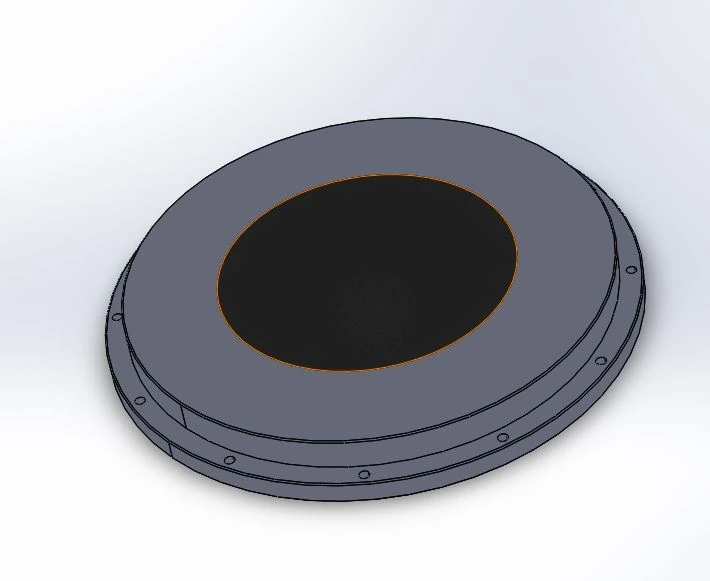
A 99% alumina ring frame carries a recessed coarse-pore porous insert, machined as one continuous zone or as concentric vacuum zones. The bolt circle on the outer flange is made to your grinder's spindle interface.
3-ZONE VACUUMØ300 / 200 / 150 mm
12″ work chuck with three concentric porous zones. One chuck covers 300, 200 and 150 mm wafers — no tooling change between sizes.
 3-ZONE VACUUM
Ø200 / 150 / 100 mm
8″ multi-zone build for lines running mixed small-diameter and compound-semiconductor wafers on the same grinder.
 SINGLE ZONE
Ø200 mm (8″)
Single continuous porous face for one fixed wafer size — maximum uniform holding area and the simplest vacuum circuit.
Why Multi-Zone Vacuum Matters
Equipment Compatibility & Custom Builds
Images show representative LONGYI builds. Zone count, zone diameters, land width, porous depth, flange thickness and bolt pattern are defined per drawing. Equipment names are trademarks of their respective owners and indicate compatibility only; LONGYI is not affiliated with these manufacturers.
Filmed on Real Equipment
A LONGYI chuck table running on a wafer grinder, plus the principle behind it.
Chuck Table in Processing on a Wafer Grinder
The wafer is cut while it is held, so the chuck surface is the reference the cut is taken against — a chuck that has lost its form cannot be compensated by dressing the wheel.