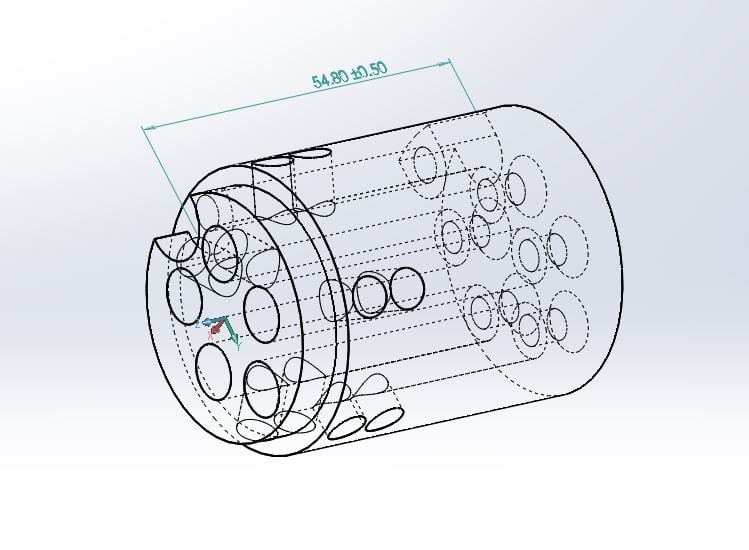
Ceramic Connector: Debris-Free, Resistance-Based Signal Detection
LONGYI precision ceramic connectors are engineered for resistance-based detection systems. We address critical industrial pain points, such as debris generation and signal instability during frequent plugging, ensuring the highest data reliability for precision testing equipment.
LONGYI ceramic connectors use high-hardness technical ceramic materials to prevent debris and wear during frequent plugging, delivering stable resistance-based signal transmission for semiconductor testing, steel and slag detection, medical endoscopy, and aerospace sensor applications.
Key Specifications
Why Choose LONGYI Ceramic Connectors?
Stable Signal Transmission
Optimized for resistance-based detection with zero interference for testing fixtures.
Debris Prevention
High-hardness ceramic materials prevent component wear and debris during frequent plugging.
Extreme Environment Ready
Exceptional thermal stability and chemical corrosion resistance for harsh industrial use.
Custom Engineering
Precision machining tailored strictly to your specific technical design and tolerances.
Recommended Material
LONGYI ceramic connectors are commonly manufactured from high-purity Alumina for its excellent electrical insulation, wear resistance, and dimensional stability under repeated plugging cycles.
Alumina (Al₂O₃)Global Applications
Semiconductor Testing
Used in high-frequency test fixtures to ensure signal purity and prevent metal fatigue interference.
Steel & Slag Detection
Provides reliable insulation and resistance signal feedback in molten metal and high-heat environments.
Medical Endoscopy
Biocompatible and autoclavable connector components designed for advanced surgical equipment.
Aerospace Sensors
Maintains structural integrity and electrical contact under extreme vacuum and temperature fluctuations.
FAQ
Common questions about customization, lead time, and mass production
Do you offer customization services?
Yes. We manufacture based on your design drawings or physical samples. We also assist clients in transitioning components from metal to advanced ceramics for improved durability.
What is the typical lead time?
Upon confirmation of payment and drawings, the standard production lead time is approximately 20 working days.
Can this product be mass-produced?
Yes. For high-volume requirements, we utilize Ceramic Injection Molding (CIM) technology to ensure output consistency and cost-efficiency.
Also Known As
Depending on the equipment maker, industry, or region, LONGYI ceramic connectors may also be referred to as Alumina Ceramic Connector, Insulating Ceramic Connector, Ceramic Electrical Connector, Ceramic Pin Connector, High-Temperature Ceramic Connector, Ceramic Insulator Connector, Ceramic Contact / Terminal, and Resistance Detection Connector. Although the terminology varies, these names generally describe the same high-precision ceramic connector for stable, debris-free signal detection.
Ready to Evaluate Your Design?
Submit your technical drawings to our engineering team for a professional feasibility assessment.
Request an Engineering ReviewExplore more about LONGYI's engineering capabilities
Related Manufacturing Processes
LONGYI ceramic connectors are produced through the following in-house processes: