
Porous Ceramic (Porous Alumina) – Properties & Custom Parts
Porous Alumina (PA Series, Al₂O₃-based) & Porous Silicon Carbide (PS Series, SiC-based) · 多孔陶瓷 · Graded by Pore Size
Porous ceramic — also called micro-porous or gas-permeable ceramic — is a class of technical ceramics deliberately sintered to leave open, interconnected porosity instead of being fired to full density. The most widely used base material in this family is porous alumina (Al₂O₃-based, LONGYI's PA Series), alongside a silicon-carbide-based PS Series — both manufactured in Taiwan by LONGYI Precision Technology and graded by pore size from 1 µm up to 100 µm, machined in-house into vacuum chucks, air-bearing plates and gas-diffusion components for semiconductor and flat-panel equipment.
Material at a Glance
Porous ceramic turns "material" into "function" — and porous alumina is the base material most customers choose first.
Every dense ceramic on this site is engineered toward 0% water absorption — that is what makes it a solid, structural part. Porous ceramic inverts the goal on purpose: 35–40% porosity, graded by pore size from 1 µm up to 100 µm, turns the ceramic body itself into a flow path, so vacuum can be pulled evenly across an entire working face without grooves or O-rings — filtration vacuum degree is rated at ≥ -0.08 MPa across the whole family. That lets thin wafers, fragile glass, and irregular or perforated parts be held flat without print marks or distortion. The two base materials split cleanly on electrical behavior: the SiC-based PS series sits in the static-dissipative range (10⁷ Ω·cm), useful where the chuck also needs to bleed static charge, while the Alumina-based PA series (porous alumina) is far less conductive (10¹³–10¹⁴ Ω·cm), closer to true insulation — and because it carries no electrical requirement, porous alumina is usually the simpler, lower-cost default unless a job specifically needs static dissipation. Mechanically both stay well above what "40% porous" suggests: 250–300 GPa modulus and 1200–2500 MPa compressive strength, so a chuck face can be ground flat and hold that flatness under clamping load. The honest limit: that same porosity rules porous ceramic out the moment a fully dense, zero-porosity structural body is required.
How Porous Ceramic Compares
Five properties from the range where porous ceramic's numbers matter most. Hardness is not shown here — the PA/PS data is measured in Rockwell HRA, not the Vickers HV1 GPa scale used on the rest of this site, so the two are not directly comparable; see the Rockwell values in the property tables below instead. Where the two base materials diverge sharply (thermal conductivity, volume resistivity), both are marked separately.
Bars above show where porous ceramic sits in each property. Markers are spaced evenly by rank, not to linear scale. Porous ceramic ranges span the full PA (Alumina-based / porous alumina) and PS (SiC-based) grade families; where the two families diverge sharply, each is marked separately. Representative grades: Alumina = AOW37 / AOI38 · Zirconia = ZOI60 · Silicon Carbide = SCB32 / SCB316 · Aluminum Nitride = ANG34 · Machinable = BN-T2300. Values from LONGYI internal property testing.
Porous Alumina & Porous Ceramic: Properties by Grade
Typical values from LONGYI internal testing, by base material and pore size. Grade codes (PA/PS + pore size) are LONGYI reference codes assigned for this page, not yet official part numbers.
Quick reference — pore size, porosity and density by grade, pulled from the full tables below. — marks a property LONGYI has not yet published a measured value for; see the note under the table.
| Grade | Base Material | Pore Sizeµm | Porosity% | Air Permeability | Densityg/cm³ |
|---|---|---|---|---|---|
| PA03 | Porous Alumina | 1–3 | 35 | — | 2.7 |
| PA05 | Porous Alumina | 5 | 35 | — | 2.6 |
| PA10 | Porous Alumina | 10 | 35 | — | 2.5 |
| PA20 | Porous Alumina | 20 | 40 | — | 2.5 |
| PA30 | Porous Alumina | 30 | 40 | — | 2.4 |
| PA50 | Porous Alumina | 50 | 40 | — | 2.4 |
| PA100 | Porous Alumina | 100 | 40 | — | 2.4 |
| PS03 | Porous Silicon Carbide | 1–3 | 35 | — | 2.8 |
| PS05 | Porous Silicon Carbide | 5 | 35 | — | 2.8 |
| PS15 | Porous Silicon Carbide | 15 | 40 | — | 2.6 |
| PS30 | Porous Silicon Carbide | 30 | 40 | — | 2.5 |
Air Permeability is not yet part of LONGYI's measured data set for porous alumina or porous silicon carbide — shown as "—" rather than an estimated figure. The closest measured figure LONGYI currently publishes is Filtration Vacuum Degree (≥ -0.08 MPa, identical across every PA and PS grade; see the full tables below), which is the achievable vacuum level through the material, not a flow-rate permeability figure. If your spec requires a quantified air permeability value, contact LONGYI directly.
Porous Alumina (Alumina-based) — PA Series
| Property | Porous Alumina (Al₂O₃-based) | ||||||
|---|---|---|---|---|---|---|---|
| PA031–3 µm | PA055 µm | PA1010 µm | PA2020 µm | PA3030 µm | PA5050 µm | PA100100 µm | |
| Bulk Densityg/cm³ | 2.7 | 2.6 | 2.5 | 2.5 | 2.4 | 2.4 | 2.4 |
| HardnessHRA> | 56 | 52 | 52 | 52 | 52 | 50 | 45 |
| Flexural StrengthMPa | 300 | 280 | 280 | 260 | 260 | 260 | 260 |
| Max Service Temperature°C | 1300 | 1300 | 1300 | 1300 | 1300 | 1300 | 1300 |
| Linear Thermal Expansion×10⁻⁶/°C | 7.5 | 7.6 | 7.8 | 7.8 | 8.2 | 8.2 | 8.2 |
| Dielectric Constantεr @20°C 1MHz | 9.0 | 9.0 | 9.0 | 9.0 | 9.2 | 9.2 | 9.2 |
| Filtration Vacuum DegreeMPa | ≥-0.08 | ≥-0.08 | ≥-0.08 | ≥-0.08 | ≥-0.08 | ≥-0.08 | ≥-0.08 |
| Volume ResistivityΩ·cm @20°C | 10¹³ | 10¹³ | 10¹³ | 10¹³ | 10¹⁴ | 10¹⁴ | 10¹⁴ |
| Breakdown StrengthKV/mm DC | 12 | 12 | 12 | 12 | 12 | 12 | 12 |
| Acid Resistancemg/cm² | 0.7 | 0.7 | 0.7 | 0.7 | 0.7 | 0.7 | 0.7 |
| Alkali Resistancemg/cm² | 0.2 | 0.2 | 0.2 | 0.2 | 0.1 | 0.1 | 0.1 |
| Wear Resistanceg/cm² | 0.2 | 0.2 | 0.2 | 0.2 | 0.1 | 0.1 | 0.1 |
| Compressive StrengthMPa | 1800 | 1800 | 1800 | 1500 | 1500 | 1200 | 1200 |
| Bending StrengthMPa≥ | 200 | 200 | 200 | 200 | 180 | 180 | 180 |
| Modulus of ElasticityGPa | 300 | 300 | 300 | 280 | 250 | 250 | 250 |
| Porosity% | 35 | 35 | 35 | 40 | 40 | 40 | 40 |
| Thermal ConductivityW/(m·K) @20°C | 20 | 20 | 20 | 20 | 25 | 25 | 25 |
Porous Silicon Carbide (SiC-based) — PS Series
| Property | Porous Silicon Carbide (SiC-based) | |||
|---|---|---|---|---|
| PS031–3 µm | PS055 µm | PS1515 µm | PS3030 µm | |
| Bulk Densityg/cm³ | 2.8 | 2.8 | 2.6 | 2.5 |
| HardnessHRA> | 65 | 60 | 58 | 58 |
| Flexural StrengthMPa | 280 | 280 | 260 | 260 |
| Max Service Temperature°C | 1400 – 1500 | 1400 – 1500 | 1400 – 1500 | 1400 – 1500 |
| Linear Thermal Expansion×10⁻⁶/°C | 5.6 | 5.6 | 5.6 | 5.8 |
| Dielectric Constantεr @20°C 1MHz | 8.7 | 8.7 | 8.7 | 8.7 |
| Filtration Vacuum DegreeMPa | ≥-0.08 | ≥-0.08 | ≥-0.08 | ≥-0.08 |
| Volume ResistivityΩ·cm @20°C | 10⁷ | 10⁷ | 10⁷ | 10⁷ |
| Breakdown StrengthKV/mm DC | 16 | 16 | 16 | 16 |
| Acid Resistancemg/cm² | 0.3 | 0.3 | 0.3 | 0.3 |
| Alkali Resistancemg/cm² | 0.05 | 0.05 | 0.05 | 0.05 |
| Wear Resistanceg/cm² | 0.05 | 0.05 | 0.05 | 0.05 |
| Compressive StrengthMPa | 2500 | 2500 | 2300 | 2300 |
| Bending StrengthMPa≥ | 230 | 230 | 230 | 230 |
| Modulus of ElasticityGPa | 280 | 280 | 260 | 260 |
| Porosity% | 35 | 35 | 40 | 40 |
| Thermal ConductivityW/(m·K) @20°C | 1.3 – 2.7 | 2.2 | 2.3 | 2.3 |
Values are typical, by grade, from LONGYI internal testing (2026-09 data set). Not covered by this data set — water absorption, Poisson's ratio, fracture toughness, specific heat, surface resistivity (Ω/sq), air permeability, chemical-resistance-by-acid-type beyond the rows above: left blank rather than carried over from the retired SED90 figures. Standard plate sizes and lead times (100×100 mm – 520×510 mm, custom sizes available; 10–45 days after order confirmation, EXW Taiwan or FOB, terms negotiable) are from LONGYI's separate porous ceramic datasheet, which is unaffected by this update. Final part specification is governed by the approved drawing and order confirmation.
What Each Number Actually Buys You
Where Porous Ceramic Is Used
Semiconductor & Wafer Handling
- Vacuum chucks and wafer work-holding fixtures
- Thin-wafer and TAIKO wafer vacuum handling
- Dicing, grinding and exposure stage chucks
- Porous ceramic air-bearing components
Flat Panel & Display
- LCD / OLED glass handling and inspection tables
- Vacuum-preload slide tables
Fluid & Gas Distribution
- Gas diffuser and flow-distribution plates
- Filtration and separation elements
When Porous Ceramic Is the Wrong Choice
We would rather tell you the limits up front than have you spec a porous chuck for a job that needs a dense, insulating or heavily loaded part. Each of these is a real boundary in the data above.
If the part is a structural body, a seal face or anything that must hold a vacuum on its own — not pull one through itself — porosity is a liability, not a feature. Alumina (Al₂O₃), Silicon Carbide (SiC) and Zirconia (ZrO₂) are all fully dense structural grades.
PS (SiC-based) grades sit at 10⁷ Ω·cm — static-dissipative, not insulating. PA (porous alumina) grades reach 10¹³–10¹⁴ Ω·cm, closer to insulating but still not validated as a high-voltage barrier. For a genuine high-voltage barrier, use dense alumina or aluminum nitride (AlN), both >10¹⁴ Ω·cm.
LONGYI rates PA grades at 1300 °C and PS grades at 1400–1500 °C continuous. For continuous service above that, alumina reaches 1700 °C and boron nitride (BN) reaches 1800–2100 °C in an inert atmosphere.
180–230 MPa bending strength is modest next to the dense structural grades. For a beam, a fixture body or anything under heavy bending load, silicon nitride (Si₃N₄) reaches 1020 MPa and zirconia reaches 1000 MPa.
If the job only needs static-dissipative resistance on a large, high-rigidity part — no vacuum flow through the body — a dense grade is the stronger choice. Anti-static ceramic (ATC)'s SCB316 grade holds a comparable 10⁸ Ω·cm dissipative range at 450 MPa flexural strength, above PS's 260–280 MPa.
Parts We Make in Porous Ceramic
Porous ceramic — both porous alumina and porous silicon carbide — is the working face in several of our standard product lines built specifically around vacuum handling.
From Material to Finished Part
Choosing a porous grade is the easy half. Whether the pore structure ends up open, uniform and flat where it needs to be depends on forming, sintering and finishing.
Advanced Ceramics Manufacturing
A porous body is engineered, not accidental — particle packing and sintering conditions are controlled to leave the pore network open and evenly distributed instead of closing it up the way a dense ceramic does. The working face is then ground flat without collapsing or smearing the surface pores shut, so vacuum flow stays uniform across the whole chuck.
See our manufacturing processAbout LONGYI Precision Technology
We are a Taiwan-based advanced ceramic manufacturer, not a trading house, and not part of the China supply chain. Forming, sintering, CNC and 5-axis machining, grinding and final inspection are handled in-house, which is what makes true OEM / ODM work — build to drawing, build to sample — practical at low volume.
About LONGYI Precision TechnologyNot Sure If Porous Alumina or Porous Silicon Carbide Fits Your Chuck Design?
Send a drawing, or describe the workpiece — thickness, size, whether it is fragile or perforated — and the vacuum pressure you are working with. Our engineers will come back with a grade and geometry recommendation plus a quotation.
Talk to Our EngineersFrequently Asked Questions
What is porous ceramic?
Porous ceramic, also called micro-porous ceramic, is a sintered ceramic body deliberately left with 35–40% open, interconnected porosity instead of being fired to full density. LONGYI supplies it in two base materials — porous alumina (Al₂O₃-based, PA series) and porous silicon carbide (SiC-based, PS series) — each graded by pore size from 1 µm up to 100 µm. The pore network lets air pass through the ceramic itself, so it is used mainly as a vacuum chuck and air-bearing material where a working face needs to pull vacuum, or float on air, evenly across its whole surface.
What is porous alumina?
Porous alumina is the Al₂O₃-based (aluminum oxide) member of LONGYI's porous ceramic family — sold as the PA series, from grade PA03 (1–3 µm pore size) up to PA100 (100 µm). It carries 35–40% open porosity, 250–300 GPa modulus of elasticity and 1200–1800 MPa compressive strength, and sits at 10¹³–10¹⁴ Ω·cm volume resistivity — far less conductive than LONGYI's SiC-based PS series — which makes porous alumina the default choice whenever a job does not specifically need static dissipation.
What pore sizes and porosity does LONGYI offer?
35–40% open porosity across the board. Pore size is selectable by grade: porous alumina (PA series) runs from PA03 at 1–3 µm up to PA100 at 100 µm; porous silicon carbide (PS series) runs from PS03 at 1–3 µm up to PS30 at 30 µm. Finer grades keep thin wafers and glass from printing with visible pore marks; coarser grades trade that fineness for lower flow resistance across a large chuck face.
Porous alumina vs porous silicon carbide – which should I choose?
Start from the electrical requirement. Porous alumina (PA series) sits at 10¹³–10¹⁴ Ω·cm, close to insulating, and is the lower-cost default when the job has no static-dissipative requirement. Porous silicon carbide (PS series) sits at 10⁷ Ω·cm, in the static-dissipative range, so pick it when the chuck also needs to bleed static charge off a wafer or panel. Mechanically the two are close — 250–300 GPa modulus, 1200–2500 MPa compressive strength, 1300 °C (PA) vs 1400–1500 °C (PS) max service temperature — so the choice comes down to electrical behavior, not strength.
What are porous ceramics used for?
Vacuum chucks and wafer work-holding fixtures; porous ceramic air bearings for frictionless, non-contact linear motion; and gas diffusion, filtration and flow-distribution plates. In every case the pore network itself does the work — pulling vacuum evenly across a whole face, floating a table on a thin air film, or passing gas through the ceramic body — rather than relying on machined grooves, ports or O-rings.
Are your porous ceramics made in Taiwan?
Yes. Both the porous alumina (PA) and porous silicon carbide (PS) series are manufactured and machined in-house by LONGYI Precision Technology in Taiwan — not sourced from, or re-sold out of, a mainland China supply chain. LONGYI handles forming, sintering, CNC and grinding under one roof, which is what makes drawing-based OEM and ODM work practical at low volume.
Explore All LONGYI Ceramic Materials
Ten material families, all manufactured and machined in-house.
Also Known As
micro-porous ceramic, gas-permeable ceramic, air-permeable ceramic, porous ceramic vacuum chuck material, permeable ceramic, breathable ceramic, porous alumina, porous alumina ceramic, porous SiC, porous silicon carbide, sintered porous ceramic, vacuum ceramic plate, porous ceramic chuck plate, PA series, PS series, 多孔陶瓷, 多孔氧化鋁, 透氣陶瓷, 多孔碳化矽, 真空吸附陶瓷, technical ceramics porous grade, fine ceramics porous grade, porous ceramic air bearing material, open-cell technical ceramic
Resources & Videos
Downloads and short clips of the applications covered on this page — thin-wafer handling, dicing without a blue liner, solar-cell handling, gas diffusion and air bearings.
VIDEO
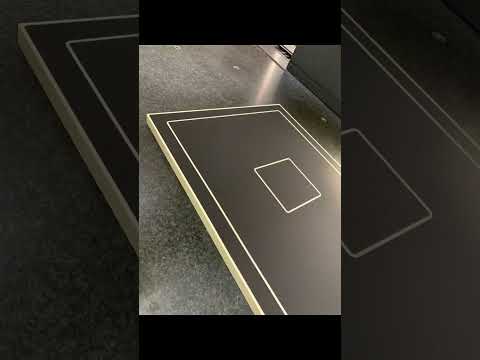
Porous Ceramic Chuck Table: Holding Thin Wafers Flat Without Suction Marks
VIDEO
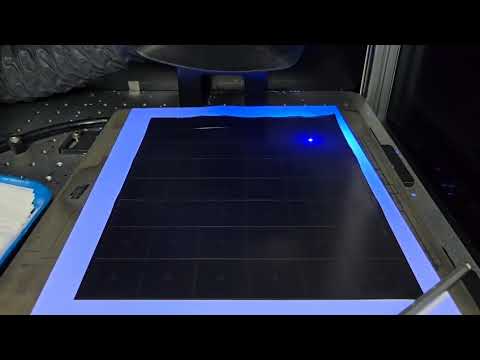
No Blue Liner: Cutting 100 µm Ultra-Thin Material on a Porous Chuck
VIDEO
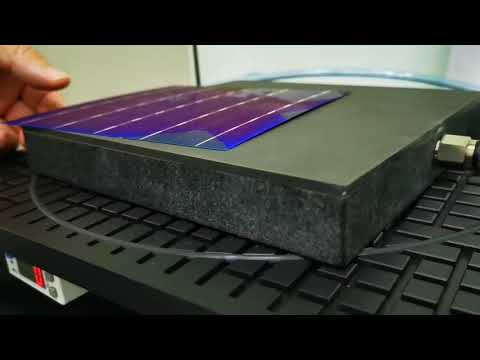
Porous Ceramic Vacuum Chuck for Solar Cell Handling — No Contact Marks
VIDEO
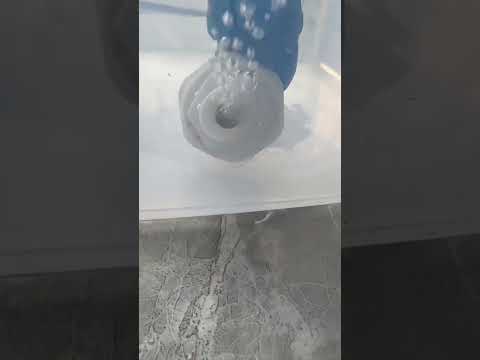
All-Ceramic Microbubble Diffuser — Sparger for Reactors & Scrubbers
VIDEO
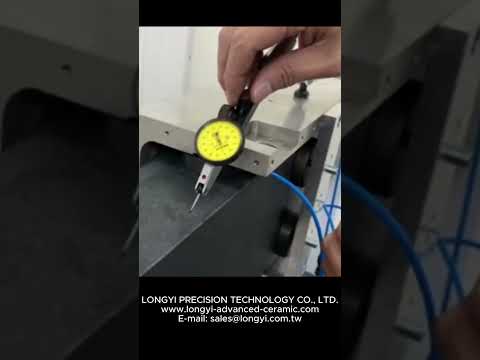
Porous Ceramic Air Bearings: Frictionless Non-Contact Linear Motion
